Uncategorized
Technical PM Deck
Installation Art, Interactive, Max/MSP
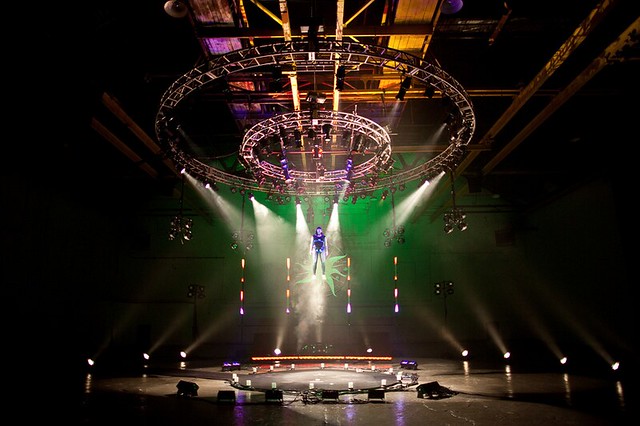
The Ascent
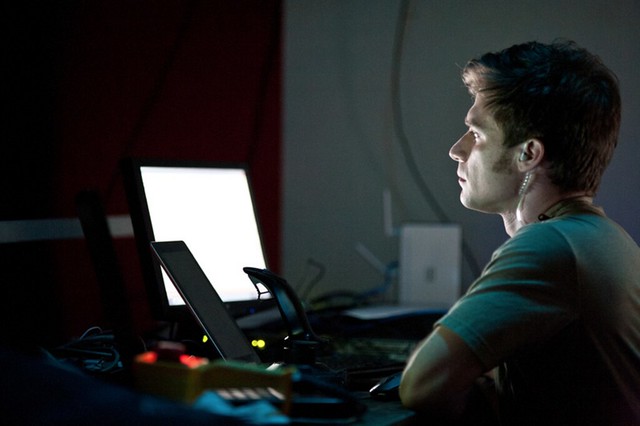
Role: One-man show operator (besides rigging assistant). System design and integration. Built and networked system to make all custom software, a/v systems, bluetooth headsets, Fisher smart winch, and photo take-away software work together. Combined my knowledge of programming, theater equipment, production and networking to develop temporary installation in Brooklyn warehouse and adapt to a tour setup. CAD change order work for promotional materials. Fabricated weather-proof camera tethering rigs to mount on truss and supply live-preview and remote shooting options.
More great photos by Andrew Federman
Taken from the website:
Meditate to Levitate
The Ascent is a mind-controlled immersive ride/game spectacle that allows riders to levitate high into the air through saturated environments of interactive lighting, sound, and atmospherics.
The Ascent puts riders in the center of a mind-controlled game world. Using mental power, riders control their own flight experience, crossing through enormous atmospheric thresholds, while triggering overwhelming EEG-reactive lighting and sound. Riders can achieve an epic-win by rising to the top of the ride, and are rewarded by an indoor firework display of hi-octane theatrics and show-stopping spectacle.
Part adventure ride, part spiritual quest, this epic experience is the first neuro-driven ride of it’s kind, and as of June 2012 was considered the largest EEG bio-feedback machine in the world. The Ascent uses neuro-technology, custom software, and an original show-control system to deliver a mythic, mind-altering take on the intersections between humans and machines, transcendence and technology.
The Ascent is fully automated, driven by custom software and hardware. A single rider is strapped into a safety harness, wearing a headband embedded with an EEG brain-wave sensor and wireless transmitter. As the rider begins to concentrate, The Ascent’s custom show control system monitors the rider’s brain state. The power of the rider’s calm and focus drives the system, lifting the rider into the air, while dynamically controlling sound and lighting. The Ascent is structured like a game, presenting increasing levels of difficulty as the rider ascends.
The experience is designed for the general public; guests sign up or wait in line to ride. There is also an observation deck for audience to vicariously participate in the experience.
Max/MSP, Performance
WOW
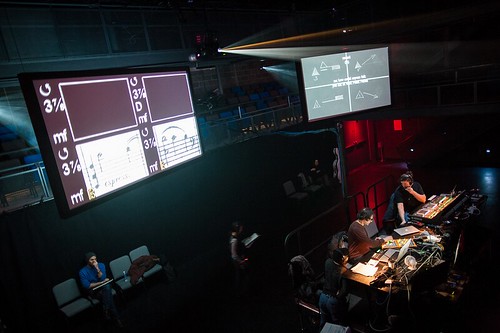
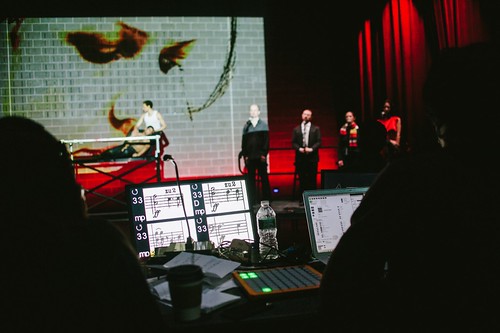
Role: Developed live composition tool for composer to use to direct musicians and vocalists to perform 4-bar motifs from a Wagner opera. WOW was featured at BRIC Arts in Brooklyn.
Tech
Built a Max MSP patch using the Java object to generate SQL commands to return image scans from a Wagner score that we prepared with meta-tags for instrument, key, tempo, mood, measure number, etc.
Advertising, Installation Art, Interactive, New Yawk, public space, site specific
BMW i: A Window Into the Near Future
Role: Networking and A/V systems designer and admin. Lead installation team hired by KBS+ to interface with sole programmer and agency producer to implement a bullet-proof system for a 24/7 interactive installation across three weeks in a high visibility store front across from Bryant Park in New York City. All production during the week of hurricane Sandy.
Intro
An interactive ad campaign that let you imagine yourself in an electric BMWi model. By using a ‘magic mirror’ effect, we used 3M’s Vikuti rear screen projection film to give the impression that you were passing a reflective window. The program ‘burned in’ the background image, while replacing all of the passing car traffic with digitally prepared assets (images of BMWs and of taxis). The object tracking would recognize cars and replace them with images of the BMWi series models (3 types, that the algorithm would use the original car’s size to determine). It would recognize taxis and replace them with prepared images of taxis, so as to keep the same aesthetic (just a world of BMWs and taxis).
Tech Details
Lead lumen per square inch studies to specify the kind of projectors needed to rear project through 3M Vikuti film. Attained first Barko 40k projectors in the United States and networked and operated remotely, despite no manuals available. Built signal flow and protocol for all networked devices, including multiple IP cameras, IP power strips, three custom gaming computers. Remotely controlled projector shuttering to alternate a single projector during night-time as well as aligned both projectors to overshoot during direct sunlight hours. Developed 24 hour support escalation plan which included mechanical turk as an off hours solution to make sure projection was always displaying correctly.
Handmade all ethernet cable.
Deployed multiple point grey system (high-speed, networked camera), modify lenses, build custom mounts and security measures.
Installation Art, Physical Computing, public space, site specific
Silent Lights
Silent Lights is an urban light installation located near the Navy Yard in Brooklyn.
Role: Technical consultant, interior light box designer and fabricator, electrical engineering, Arduino dev, electronics installation & testing
The Challenge
For the residents of northern Fort Greene, Brooklyn, the intersection of Park Avenue and Navy Street is a bleak and noisy place that is best avoided. The Brooklyn-Queens Expressway (BQE) runs directly above the semi-industrial landscape, bringing with it the ever-present roar of the 160,000 cars that traverse it daily, and throwing the pavement beneath into permanent shadow. We wanted to make this desolate urban landscape more inviting for locals and passersby.
The Solution
Silent Lights takes the Expressway’s ever-present traffic noise and makes it visible, illuminating the gloomy, clamorous underpass with a pathway of peaceful lighted gates. The lights respond to the sounds above them, lighting up sequentially as vehicles pass overhead. The hum of the traffic thus becomes a tangible, reactive presence rather than a hidden aggravation, and passersby can walk beneath the multicolored gates to experience a moment of respite from the constant noise. The installation also acts as a way-finding element, making the inconspicuous pedestrian pathway more visible and engaging.
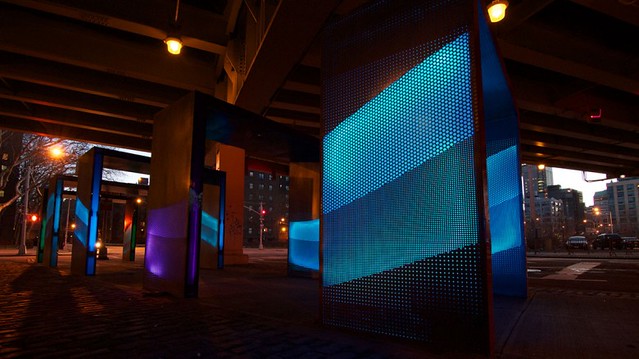
The Technical Details
The installation consists of 5 multicolored gates that light up sequentially in response to ambient noise. The gates are made of various perforated metal panels clad over an aluminum frame. Each gate contains 2 sealed white acrylic boxes; these boxes house the sequence of LEDs. In total, Silent Lights is embedded with 2400 LEDs and 2 microphones, controlled by an arduino mega microcontroller.
Partnerships & Community
Silent Lights was created in partnership with the Urban Arts Program of the Department of Transportation and the Brooklyn Arts Council. The project also received generous support from Artplace America, Black Rock Foundation, Designers Lighting Forum of New York, Awesome Foundation, and individual donors. In 2012 we held a fundraising event to raise additional funding for the project. Generous donations were made by family, friends, and the local Brooklyn community to make this project a reality.
Installation Art, Interactive, Physical Computing, site specific
C.O.R.A.L.
Intro
Role: Interactive and bunker design, material sourcing, 3D modelling, fabrication, electrical engineering, installation & testing
Each year, Beam Camp puts out a call for artists and designers to pitch a three-week project for their campers to build on site during the summer. Along with my studio, Floating Point and artist Allen Riley, we pitched the idea of an underwater LED sculpture in the shape of coral reefs.
Proposal
Since Beam Camp has over 200 kids working daily on this project, the process had to be modular. Each reef would be made up of five branches of coral, and a branch would consist of three coral “modules.” We wanted the lighting patterns to be interactive, so we also pitched the idea of a bunker on the shore with interfaces for controlling the lights.
Testing

None of us had any experience with embedding leds into silicone or resin, so we our preliminary tests were to determine that they wouldn’t overheat or discolor too much with the thickness of resin. Once the first test was successful, then we could work on the artistic-side of designing the textures and shape of the coral.
Our original idea was to 3D print the coral modules, but this proved to be both time-consuming and really not as fun for for 200 kids to build, so we switched to clay models. The plan was to make around ten clay models and have ten unique modules that could be combined in interesting ways to make the branches.


We decided to use a two part mold, because we wanted the silicone molds to be reusable to cast multiple modules. The LED strips needed to be soldered and placed in the mold before pouring the resin, and we covered the connections in hot glue to ensure nothing would short in the process.
To put multiple modules together, we first soldered the wires together and tested to make sure the signal flow worked. Then we wrapped the connection in fiberglass and painted resin on top. We’d later decide to drill holes in the fiberglass and fill the void with more resin to improve the structural integrity of the joint.

Bunker
Our placeholder for the control booth was a lighthouse, which seemed like an odd thing to install next to a lake. Digging deep inside for our inner children we felt like something that felt like the ultimate fort with control stations would be closer to what our ’80s nostalgia wanted.
I designed the control booth to look like a military pillbox bunker. It was designed to have two tiers; a control room and an observation deck on top. My main challenge was to free up as much space on the interior as well as keep it somewhat clean looking. I spent the better part of a month designing a cantilevered 3-panel window that would support the weight of a roof full of people. I achieved this by designing steel window frame that would act similar to a rally-car’s roll cage. Despite offering to weld the cage, the design proved too daunting for the camp fabricators to take on, so they modified the design to put the columns back in.
Nonetheless the bunker was a fun and tough build for the team.
Inside of the bunker, an Arduino-controlled interface would control the lighting on each of the reefs. There was a ladder on the side of the bunker leading up to a lofted platform where the coral could be viewed from a better vantage point. The railings on the roof were designed by Mitchell Dose and modeled after the coral patterns.


Build Photos:


Interfaces


Each of the five interfaces controlled a different reef. Two were capacitive touch sensors, using copper tape (designed by campers) to change the speed and color of the reefs. Two of the sensors used motion sensors and photo cells to play an analog audio circuit. The volume of this circuit controlled the lights. The last interface was an aenenometer, or a wind sensor.
Installation


To ensure a waterproof connection, the wires for each branch were run through a long conduit sheath, which was then sunk into the resin base. To conserve resin (and cut back on weight), a donut-shaped box was used to place branches around the perimeter with a hollow center. We hung the branches using rope and clamps while we poured the resin into the box.
Once the reefs were finished, they were tested one by one and brought down to Little Willy, the lake at Beam Camp, for their placement. On the evening of July 23, 2015, all of the campers were invited to the bunker for the unveiling so they could see the coral lit underwater for the first time.
Design: Floating Point:
Mike Kelberman – Design, 3D modelling, fabrication, electrical engineering, installation & testing
Mark Kleback – Design, fabrication, circuit design, code design, installation
Jack Kalish – Design, 3D rendering in proposal, code design
Gabriella Levine – Design, underwater interfacing, Arduino programming
Johann Diedrick – Fabrication, casting, code design
Mick Hondlik – Fabrication, installation
Catherine McCurry – Fabrication, casting
Charles Phillip – Project Management, fabrication
Allen Riley – Design, conceptualization, fabrication, sound design
Construction: Beam Camp
Project Leaders: Matt Robinson, Morgan Street, Mitchell Dose
Camp Directors: Brian Cohen, Danny Kahn
Documentation: Sara Tandoi, David Golann
Hacking, Physical Computing
Bot Pocket
Role: Built the mechanics, designed & 3d printed custom parts, designed and built relay and solenoid circuits for a rush pitch over a 3-4 day period.
We built a twitter-enabled microwave to let you Tweet-to-Heat a Hot Pocket. While the campaign never launched, we had a lot of fun building the rush job for a friend’s ad agency.
Mark Kleeb, my studio mate at Floating Point developed the python-code to interface a Raspberry Pi with twitter as well as circuit bending the keypad on the microwave.
In the meantime, I disassembled the door and replaced the latch with a mechanism that would be easier to defeat with a hard strike from a spring loaded rod.
The rod was a souped-up version of those pinball machine ball launching plungers. The rod was a piece of hardware made for screen doors that I used an angle grinder to cut down. The back end was fed into the magnet end of a solenoid powered by a triac (a/c relay). When the raspi knew the Hot Pocket was done heating, the relay would flip, disengaging the magnet, letting the spring-loaded rod collide into the inside of the door, defeating the now-weaker latch for instant bravado smart microwave action. Hopefully not too much radiation happening.
If you look carefully, you can see the stainless steel rod protruding out of the microwave after the door swings open.
Costa Rica
Pura Vida, Part 1
I’m lucky to have very generous friends, the Hondliks, who welcomed me in their vacation house in Flamingo Beach, Costa Rica. Similar to my trip down south, I made a bucketlist. I kept it short and sweet with ~10 items, which I’ll post about in a bit, but let’s start with some eye candy!

birds at sunset

Isla de Pajaros

silhouettes

marina sunset
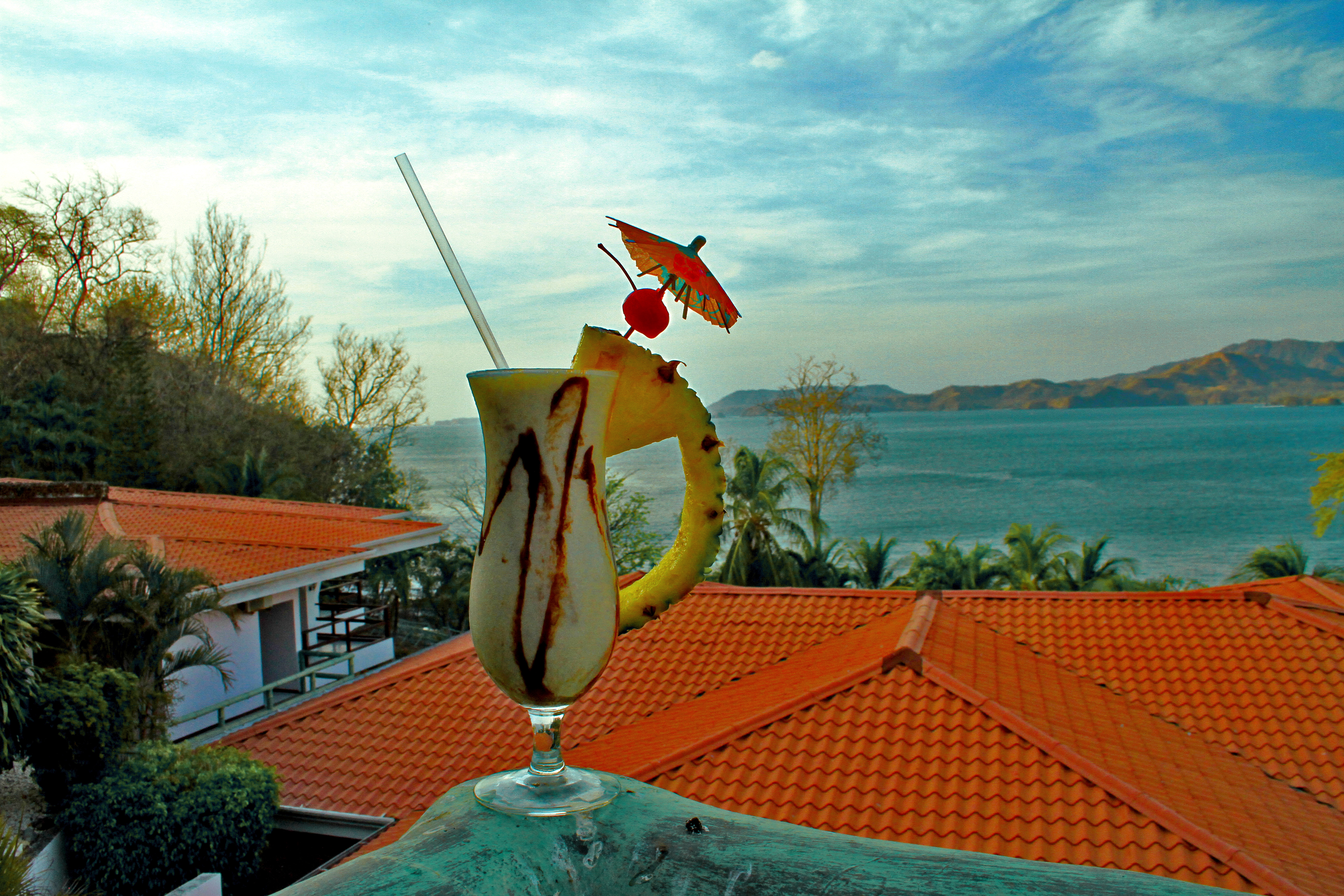
pina colada berg

derelict docks
Down South
Goal #18 :: Trust a Stranger
When I originally added this goal to the list, I had no idea what it would entail. It has the good kind of ambiguity that lends itself to interpretation. At the same time it’s such a juicy goal there exists the pressure come out with a great story.
This was Dan’s first day on the trip. He flew into Nashville that morning and we had planned on checking out a few more sites, including the Country Music Hall of Fame and an open-bar Thrillist party (that Dan’s friend would be attending). After a day walking through scorching heat, we were pretty worn, and decided it was time for the air-condition Hall of Fame. We paid the parking fee and climbed the steps to a stadium sized cultural staple. It may have been the southern food coma that’d set in not 20 minutes before, but the $25 entry fee felt like a good ol’ fashioned middle finger in our sweaty faces. After a simultaneous “fuck that,” we vamped in the gift shop, ironically trying on cowboy hats while we decided our game plan. “D’you wanna just drive to Savannah tonight?” Dan proposed. “Let’s do it,” I agreed. We might’ve just needed better tour guides, but after a day and change we were seeking a deeper South. At about 5pm we hit the road, excited with our decision to change it up.
Our navigation put us about 8 hours from Savannah, but we had camping gear and a long drive so we didn’t overthink it. It was on the late side, so we just missed Ruby Falls (the largest underground waterfall) and Rock City Gardens (supreme cliff vista that vaguely sounds like a KISS song). Atlanta was never part of the itinerary, but it made perfect sense as a pit-stop for dinner. Since we were going to do ATL for dinner, I texted my friend Sara back in New York. She’s from Atlanta and has multiple family members in the restaurant industry, so asking her recommendation was a no-brainer. She gave us the name of her family’s place – Oak Street Cafe in Roswell, GA (15 mi north of Atlanta). Her cousins run the place and apparently her grandma makes the meatballs! I immediately plotted the journey with my phone, but realized we’d be an hour too late. We thanked her for the suggestion and reverted back to scouring Yelp for a meal worthy of our hunger. We both craved seafood and set our sights on a spot called The Optimist. With seating ending at 10pm, and our ETA being 9:55, we knew there was no room for error. One wrong turn could be the difference between a great meal and an okay one. We reached the block, but drove passed the restaurant by a few hundred feet. Dan, having driven the last four hours, was a bit braindead at this point. After what seemed like an eight-point-turn, I hopped out of the car and ran into what I thought was the front door. It was actually a backdoor by a more private dining area, but I made it to the bar with haste to find someone who’d seat us before the clock ran out. The first server I found led me to the maître d’. She was super friendly and was happy to hear that we drove straight from Nashville to their restaurant. We valet parked and were seated within a few minutes.
It was the eve of my birthday and we ordered like kings. Green curry mussels to start, followed by swordfish and Alaskan halibut for Dan and I respectively. Everything was amazing. The mussels were probably the best thing we ate all trip. We couldn’t let the curry go to waste, and asked our waiter Paolo to hook it up with more garlic bread. When the dessert menu came, I don’t think we were actually hungry, but our curiosity led to two more plates; I opted for the fried peach pie with white pepper ice cream and Dan went with the classic key lime pie with whipped cream. It was around 11:30 by now, and we knew Savannah was a bit out of our reach with an impending food coma and a lack of sleeping arrangements. I sipped an espresso and used some camping apps to find a local campsite that didn’t require prior reservations. After an unsuccessful search, we asked Paolo if he knew any spots that didn’t require reservations. We’d already filled him in on our epic checklist and the overall improvisational nature of the trip, so he first suggested a city park to camp in, admitting that he didn’t know the legality of doing so. We shrugged off the situation, as an encounter with the police was probably the best-case scenario of that plan. New to the area, he went off to ask the manager if he knew of any places to camp.
Paolo came back a few minutes later, “the manager has an empty lot you can camp on if you’re up for it.” We both exclaimed “that would be awesome,” with a tone of incredulity. We laughed at the oddity and serendipity intertwined in the moment. With the proposal accepted, Darren came up to the table and introduced himself. We explained the original plan to make it to Savannah and he agreed that we bit off a little too much road this late in the day. He gave us the low-down on his newly purchased property; a partly finished recording studio, situated next to a tattoo shop and across from a dive bar on Ponce de Leon, had an overgrown lot behind it that we could camp in. “It’s got a fence all the way around, so no one will fuck with you,” he assured us. He added that he was booked for a recording session in the morning, so we’d have to be out first thing (which I assured him was already our game plan).
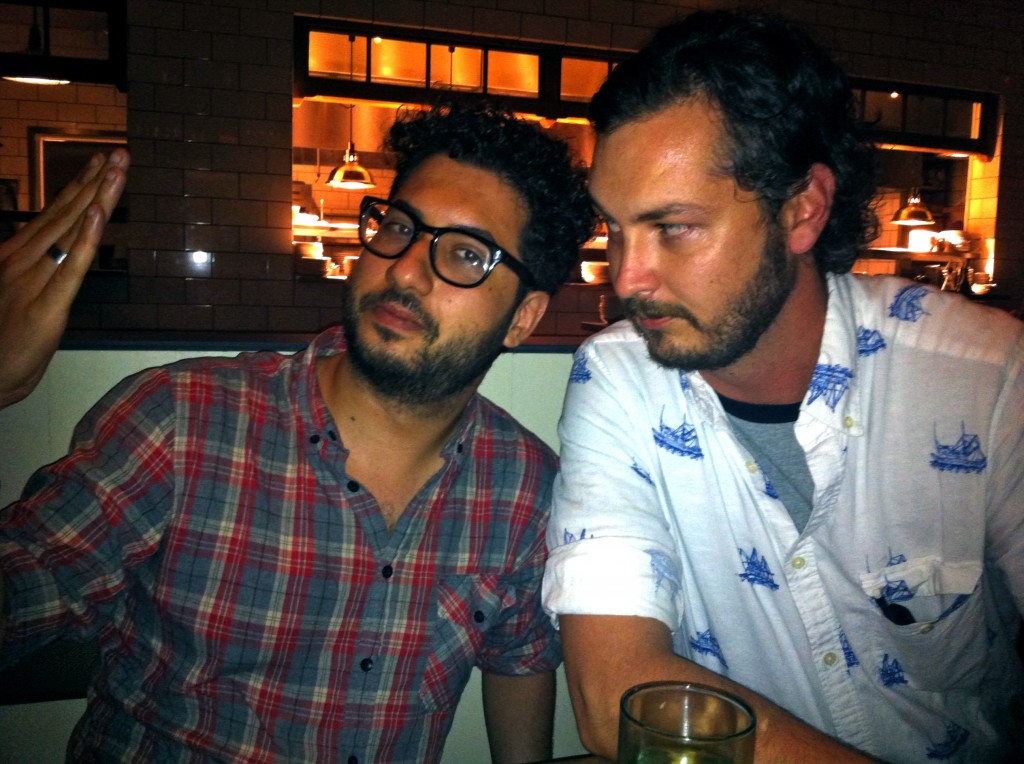
Darren at The Optimist
Darren drew a diagram of the lot was location on a napkin and gave us the address. We thanked him profusely and snapped a quick photo. After leaving Paolo with a fat tip, we fetched the car and headed toward our new destination. “What the fuck is happening right now?” we laughed on the drive over. A new Black Keys single kicked off on the radio, as it really felt like the stars aligned for us just minutes ago. His first night on the road, Dan needed some contact solution. We pulled off to a Wallgreens for some supplies. While I waited for Dan, I drank a mango Gatorade and watched the parking lot come alive its nocturnal inhabitants. I could tell then and there this was about to get interesting.

Entry to the lot
We drove a mile or so down the road to find our side street and turned left. We crept down the block, eyes peeled for the vacant space we’d call home for a night. A long wooden fence hid its contents before the one-story commercial spaces sprouted up at the end of the block. “That’s got to be it,” I pulled a U-turn at the first storefront and threw it in park. I walked to the far left end of the fence where there was trashcan storage and generous hole in the wooden fence. I stepped through to find a steep drop into a valley covered in ivy and overgrown weeds. I turned to the right to see a staircase dimly lit by a nearby streetlamp. “Hopefully it’s flatter over there because this is way to steep to camp on,” I thought to myself.
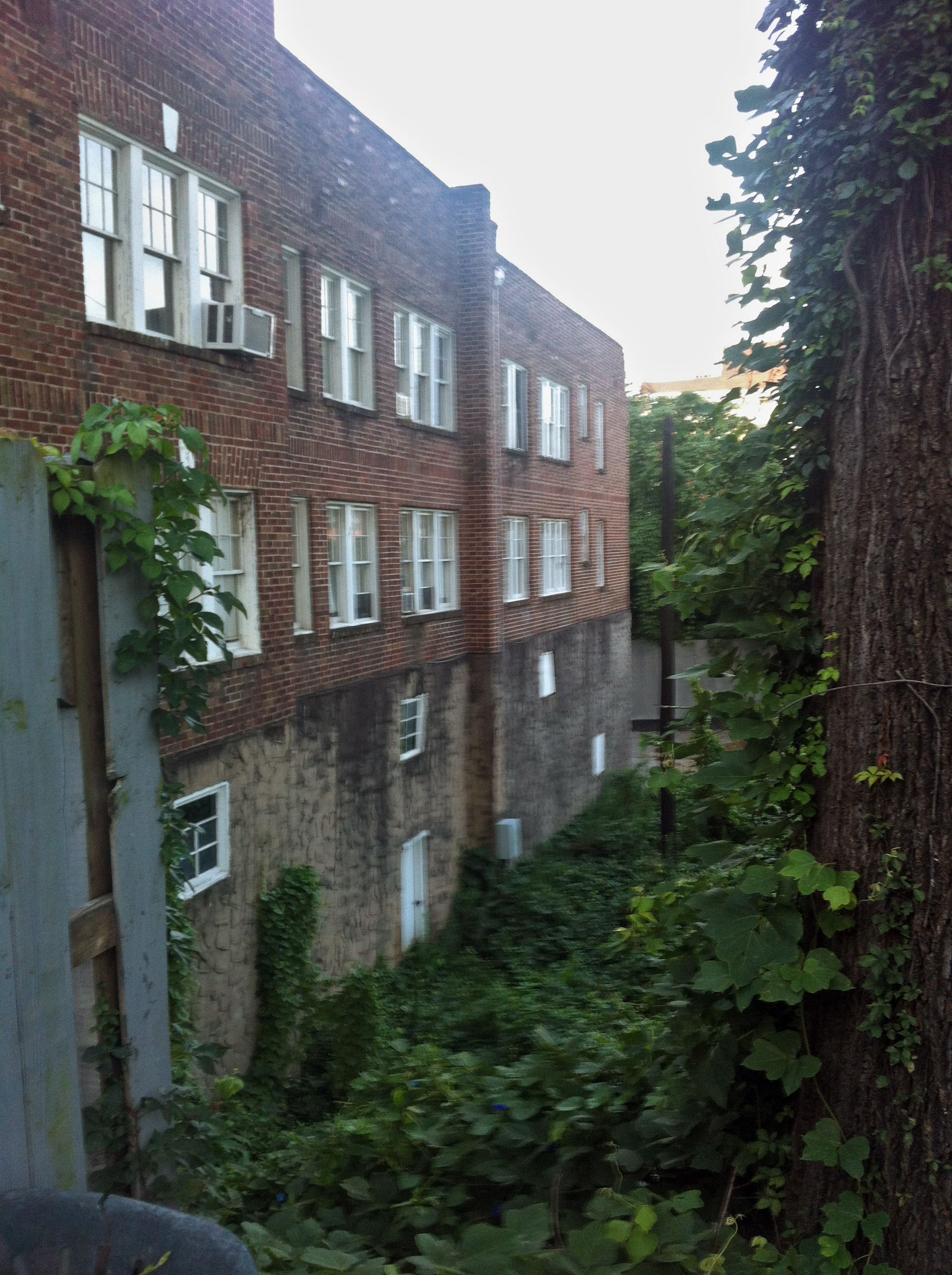
Apt building overlooking the lot
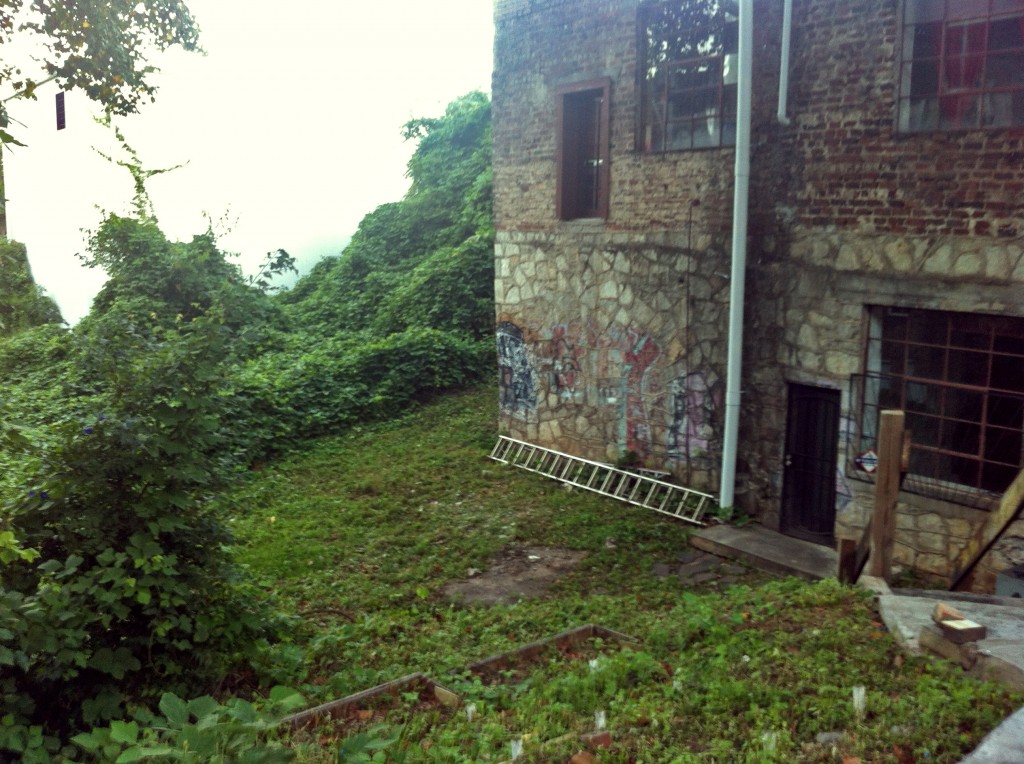
Urban Campsite
I returned to the car to update Dan that we’d found the place and to come check it out. Dan was verbally not a fan of the whole idea anymore. The lot was certainly not the tranquil prairie we imagined; it was closer to the vacant lot you’d come across in Lower East Side in the Guliani era. That being said, the apartment building overlooking the lot was a blessing and a curse. It challenged the privacy of the yard to the fact that vagrants couldn’t post up for too long. At the same time, with half of its windows lit, we kept our headlamps on low as we questioned the legality of our situation.
Dan offered to pay for a motel, pointing out that the risks far out-weighed the benefits. I argued that we’re doing it for the story, that we were on this path for a reason. I reasoned with him by suggesting we setup the tent, lock our valuables in the trunk, and if it came down to it, sleep with our knives. We setup the tent in record time, cleared some broken glass from the vicinity, and tossed our sleeping bags into the tent before heading back to the car. As we repacked the trunk with everything tempting enough to break a window, Darren rolled up to check in on us.
“Ah, you guys found it” he said from his window. With the car half-packed, I walked across the street, headlamp still on.
“Yeah, we just setup the tent and are getting our last few things… thanks again for letting us crash,” I replied.
“No problem. Just make sure you’re out first thing tomorrow,” he muttered just louder than a whisper.
I assured him that we were still planning on departing at 7am. He offered us his hand to shake at a 45 degree angle as he whispered his salutations. In retrospect, it must’ve been a cool-guy handshake, but in the moment it definitely tainted the entire scenario. As he drove off, Dan turned to me “What the fuck was that? This is not right. Some shit is about to go down.”
I confirmed the weird vibe, “You know I was cool with all of this and then that just happened.” I convinced him that the prudent thing to do was to finish locking our things up in the car and walking to the bar on the corner. It was a win-win since we could hangout on the porch and watch the block for unexpected guests as well as get a couple rounds of liquid courage before our brazen attempt at urban camping. We made our way into a sweet dive called The Local. I knew I was home hearing the Ty Segall and then Harlem blaring from the speakers upon entry. Mindy, the punk-rawk bartender, poured me a birthday whiskey while we drank a top-shelf selection of Dan’s over rocks.
We met some friendly people at the bar who seemed to also have Nashville and Savannah in common. Dan took a liking to one of them, and as her friends left for the next bar on their journey, I felt my sleep deprivation kicking in. I said my goodbyes and headed back to the tent. It was still hot and humid, so I unzipped my sleeping bag and slid my sheathed knife under the airplane pillow. Dan soon joined me and kicked off his lemon-print Adidas. The pungent odor of his sockless foot-sweat seared the tent. “You are getting your own tent for the rest of the trip,” I coughed. He apologized and quickly fell into a whiskey-catalyzed slumber.
As I layed en-guarde in the doorway of the tent, I notice a blue flashing light illuminating the apartment building. Were the cops here? Did someone see our tent from the window? Should we just stay in silence and hope it’s unrelated? The knot in my stomach grew until I decided to do some recon. Slipping my shoes on, I dashed up the stairs in my best ninja. I peered through a hole in the fence toward the origin of the blue light. It was just neon advertisement. Wow, time to relax dude.
With a full exhale, I returned to the tent in a casual gate to find Dan had slid down the incline in to the middle of the tent. I zipped myself back into the tent, hoping to disturb him enough that he’d return to his area. No dice. I kicked my Bucketfeet off and cuddled up to pillow+knife combo to catch a few winks. That’s when the snoring started. This was full-drunk snoring. I don’t know how he’d got so drunk, but I think all the travel had something to do with it. I lay there pondering how the women in his life could deal with this. I told him to “shut up” in a stern tone, which would only interrupt the noise for a minute or so. Let me clarify – he’d slid half the tent down, so he’s a foot from my head, facing my ear, snoring at full volume. That’s when I chose feet over snore. Yes, the feet that smell like sockless shoe-wearing after a day of walking in Nashville in 98 degree weather. Yep, that’s how much I needed to get some rest.
After about ten minutes, with my face pressed into my t-shirt, my mind drifted into the subconscious, images of how I imagined Savannah to be animated before, Whack!, kicked in the back by good ol’ Drunkin Danuts behind me. “Are you serious right now?” I bitched. As if perfectly timed, the second kick came as fell asleep for the second time. “Dude you gotta stop kicking me” I said loud enough to jar him to a half-awake daze. The whole point of urban camping was to come out with some sleep. I fall asleep. Deep sleep. At least an hour or two has passed. Dan wakes me up. It’s twilight. “I’ve gotta shit, what do I do?” Equally enraged and in disbelief that he’d bother me for such a thing, I mumbled an unintelligible “wet wipes in the car.” I fall back asleep.
A fuller morning light wakes me up and my alarm soon follow. We breakdown and pack up the tent like the Gestapo is on their way. We laugh again, looking over the lot in daylight. “Let’s get the fuck outta here,” we agree and head to a spot called Thumbs Up, a greasy spoon diner on the way to the highway. I wish I could remember the exact words Dan used, but he confessed that he’d been quick to judge the situation; something like this: “Here I am thinkin this dude it gonna mug us, when he’s obviously a really cool guy that just let to strangers crash on his property. I gotta stop doing that.” Whatever he took away from it, I’m glad it was positive. We’re all fed fear and distrust by the media. It’s good to stand your ground and rely on the good nature of strangers once in a while.
Before we hit the road, we take turns brushing our teeth in the bathroom and order from a build-your-own-breakfast menu. The waitresses broke the mold in terms of being attentive and hospitable and we were on our way with coffee-to-go cups. Definitely a good note to leave Atlanta on. Savannah here we come!

Thumbs Up Diner
Down South
Goal #4 :: Record a Song
While the majority of the road trip was unplanned, Third Man Records is probably the only sight-seeing I had to do while in Nashville. I’d heard about the fully restored Record Booth when it was first publicized on the website and now I’d have my chance to experience it in all of its glory.

Arriving at Third Man Records
Dan & I made our way over to the record shop shortly after abandoning our attempt to ride bikes around East Nashville (it was ghastly hot and we were clearly riding in the wrong places in an up-and-coming neighborhood). We parked in an adjacent lot, greeted by the radio tower sign of Third Man. As we approached, a drifter offered us a ‘steal’ at three golds for a one-y (3 Marlboros for a buck). We politely declined, already armed with $4.50 packs and a greater mission.

Legos from Gondry’s ‘Fell in Love With a Girl’ video.
As we entered the shop, we were greated by Katty, the bubbly manager. While we waited for our turn with the Record Booth she filled us in on the process – put in the tokens and when the red light flicks on, that’s your 10 second warning to record. We explored the store’s rock nostalgia and vintage accoutrements.

Dan after his spoken word sesh
I practiced a half-written song, trying to decide how to fill the 150 seconds I’d have. Dan went first. He read a poem, had some extra time, and tried for two but was cut-off mid-verse. When it was my turn, I put the tokens in and waited while practicing the intro lick. After a couple minutes of waiting, Katty came over to restart the machine.

My turn with the Record Booth
Poised for my two minutes of history, I noticed the microphone in the booth is rather high. In hindsight, having a guitar strap would have solved the problem, but luckily the store’s junior sized acoustic was light enough to wedge under my strumming elbow. Once the recording finished, the 45 plays back in the booth before it is picked from the platter by vacuum and dropped down the chute.

Katty presenting my first 45
We took our freshly cut 45s to Katty at the front counter. She slipped Third Man dust jackets over the vinyl while we settled up. While we talked about the sweet digs in the shop, I couldn’t help but tell Katty about Rotobooth. If there were a perfect setting for my rotary-dial photobooth, Third Man (with a record booth, rotary telephone booth, and Mold-o-Rama) is that place. She loved the photo I showed her and insisted I send her an email that she could share with the rest of management. If you’re reading this, I’ll send that over shortly!
If you’re in Nashville any time soon, be sure to make it to Third Man Records.
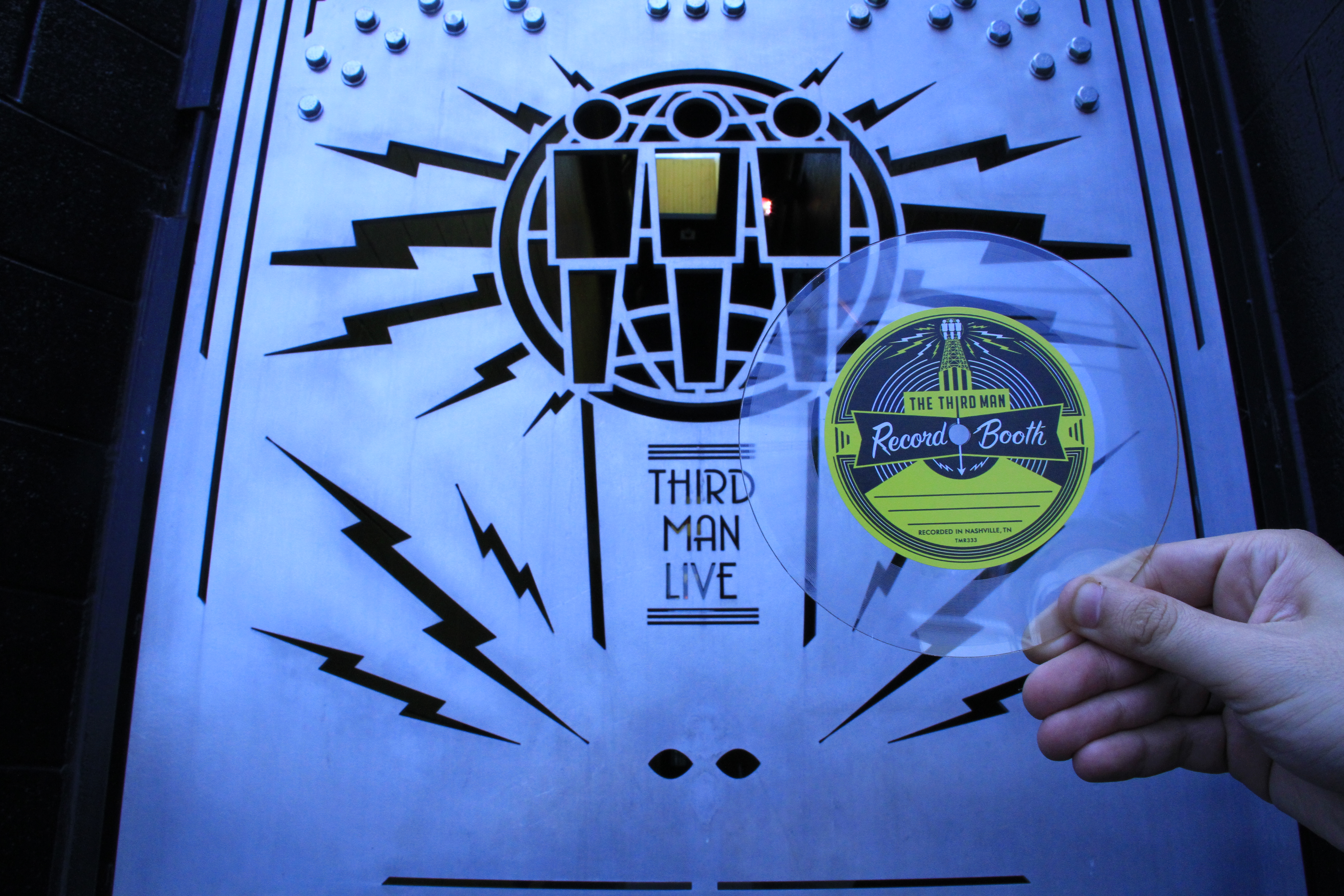
Kelbertrack on Third Man Records
Down South
Goal #16 :: Barter for an instrument
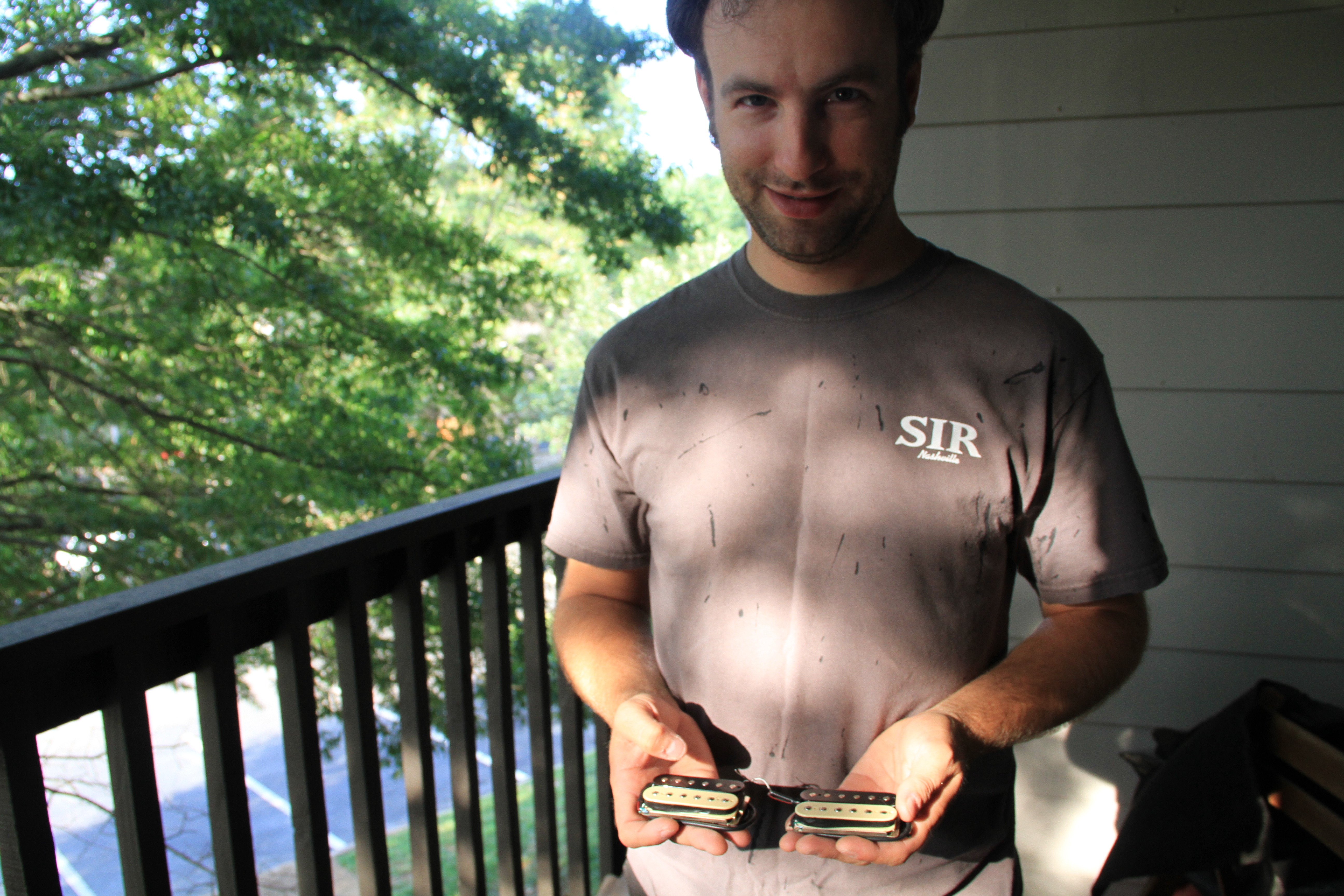
Reid and his handmade SG pickups
While visiting Nashville, I stayed with my friends Reid and Jocelyn. Reid has always been a big inspiration to me; his self-taught projects run the gamut of guitar building, tube amp construction and car restoration. Lately he’s been winding custom pickups for Fender Strats and Gibson SGs. This is especially exciting for me, since those happen to be my two electric guitars. The problem with the SG’s humbucker pickups is that the high-mids get lost on the bridge pickup. That means the sound gets rather muddy when you add effect pedals in line. Reid explained to me that the coils are wired out of phase, to reduce noise and give it that rich, trademark sound. He’s been experimenting with changing the ratios of the coils (number of windings), to affect how the two coils pickup sound, and therefor change the resulting tone.
Pickups are largely accountable for what an electric guitar sounds like while amplified, so changing the pickups is like changing guitars.
Reid has a number of pickup projects but the tricky part is sourcing the bobbin, the plastic housing that varies guitar to guitar. Custom bobbins is something I can design & print on my 3D printer. Perfect opportunity for a trade! Reid gave me a set of his custom pickups in return for 3D printing him special bobbins for his project. Stay tuned for some comparison videos of my two sets of pickups.
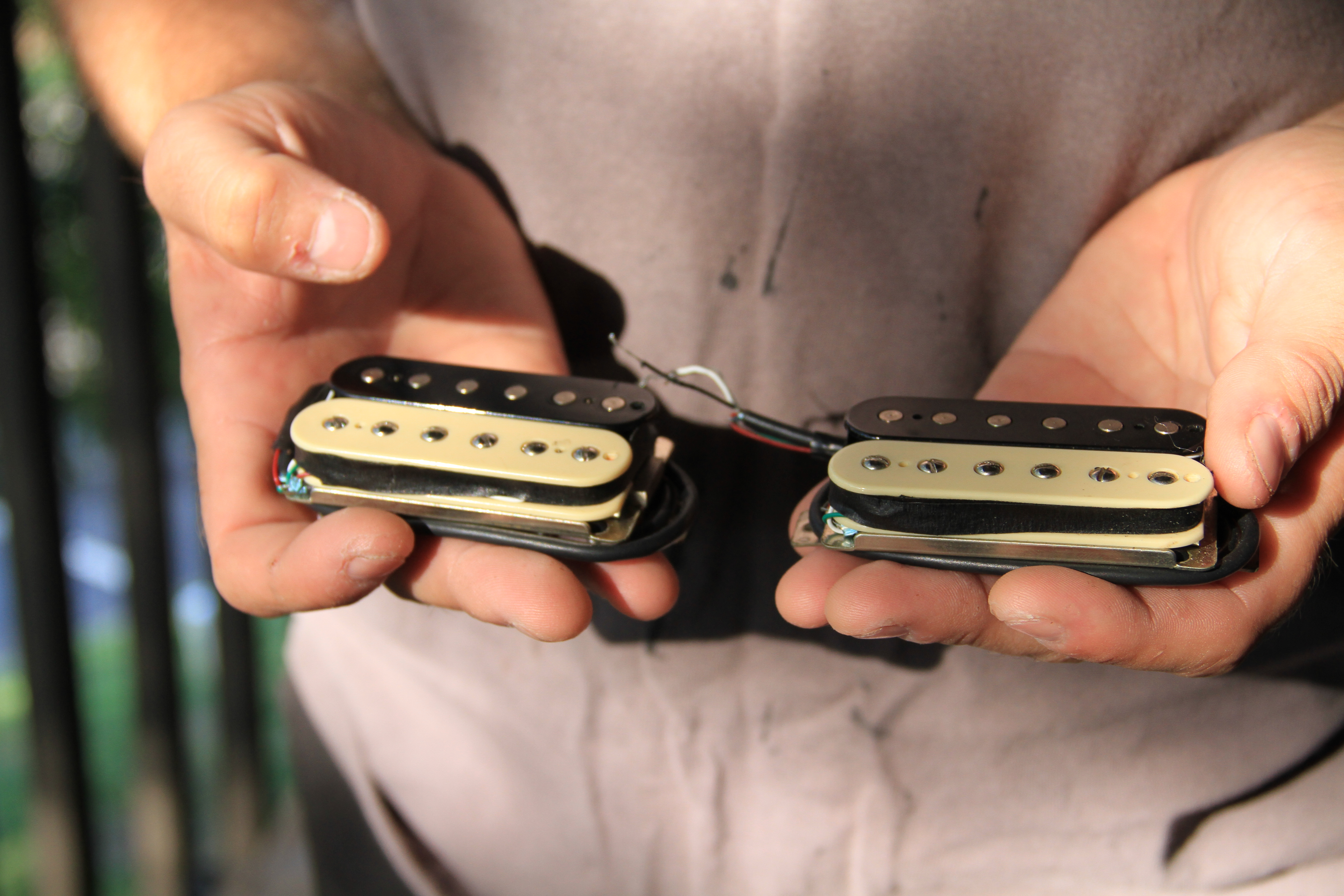
RCH Pickups
Down South
Goal #16 :: Give Something Away

Erin and her gift
When I first drove in to Nashville, my navigation brought me to the main drag on Broadway. It’s similar to Times Square, in the sense that locals don’t really go there. Despite the drive I just made, I had to get back in my car, it wasn’t where I wanted to be. I asked some over-make-up’d women where I could find a ‘non-chain’ cafe for some java and grub. The younger of the two recommended a spot called Fido on the west side of town.
Fido is a large cafe with a lot of turnover, so you order at the counter and they bring the food to your table. While waiting in line, Erin and I began chatting. Feeling the pressure to make every meal in the South my new favorite, I checked with her if I was ordering the right thing. After we placed our orders, I asked if she’d like eat together. After we picked a table, I realized she’d only ordered coffee and she’d be watching me shovel down my first meal of the day (at 2:30 pm).

Salmon with cheddar grits, spicy kale, and fried onions.
Erin was from Nashville, but was attending school in Ohio. She was at the cafe to work on her research paper examining the money spent on incarceration and policy that encourages that rather than rehabilitation.
While explaining some of the projects I’ve worked on, 3D printing came up. She’d never heard of 3D printing before, so I explained the process to her – equating it to a moving hot glue gun. Luckily, I’d brought a white low polygonal tiger that I’d printed on New School’s Makerbot Rep2. The plan was to shoot the tiger in the timelapse videos, but I’d never gotten around to it. Seeing as she didn’t order food, I’m wasn’t sure I could count this as ‘dinner with strangers’; then I remembered about ‘give something away’. A 3D print is a pretty amazing gift for someone that hadn’t know about 3D printing ten minutes before. Nailed it.
Down South
Ash to Nash

Morning fog outside of Asheville
The leftover turnip-potato-bacon mash made an incredible breakfast. The drive to Nashville runs through some of the Smoky Mountains. I picked a picturesque time to make the drive.
Down South
One day in Asheville
Since I decided to take a road trip to Nashville, I’ve been hearing about Asheville. When I realized it was also the home of the Moog headquarters, it became a new highlight on my itinerary. My five hour drive stretched closer to seven, after taking the time to blog about all of the hiking at a Starbucks.
I pulled into town at 5:15pm, headed directly to the Moog shop that’d only be open for the rest of the hour. I’ll admit that I went straight for the guitar pedal demo area, even though it’s Moog’s modular synths that put him on the map for most. I played a red tele’ through a chain of Moog pedals, into an Orange amp. The second pedal from the left was a really unique distortion pedal. All of their pedals have control voltage inputs, meaning that you can plug-in an expression pedal to control one of the effect’s settings with your foot (think wahwah pedal). On the distortion pedal, you can control the filter frequency, making sounds somewhere between a wah and a fuzz box. And no, it sounds nothing like a distortion pedal through a wah.

Moog guitar pedal setup
Not before long, I was geeking out with the manager Rob on all the great toys in the shop. I mentioned the Littlebits Synth Kit that I worked on last year. He said the he and especially the engineers at the shop were huge fans. I asked Ron to stand by his favorite instrument in the shop. He chose the limited edition Voyager (only 100 made).
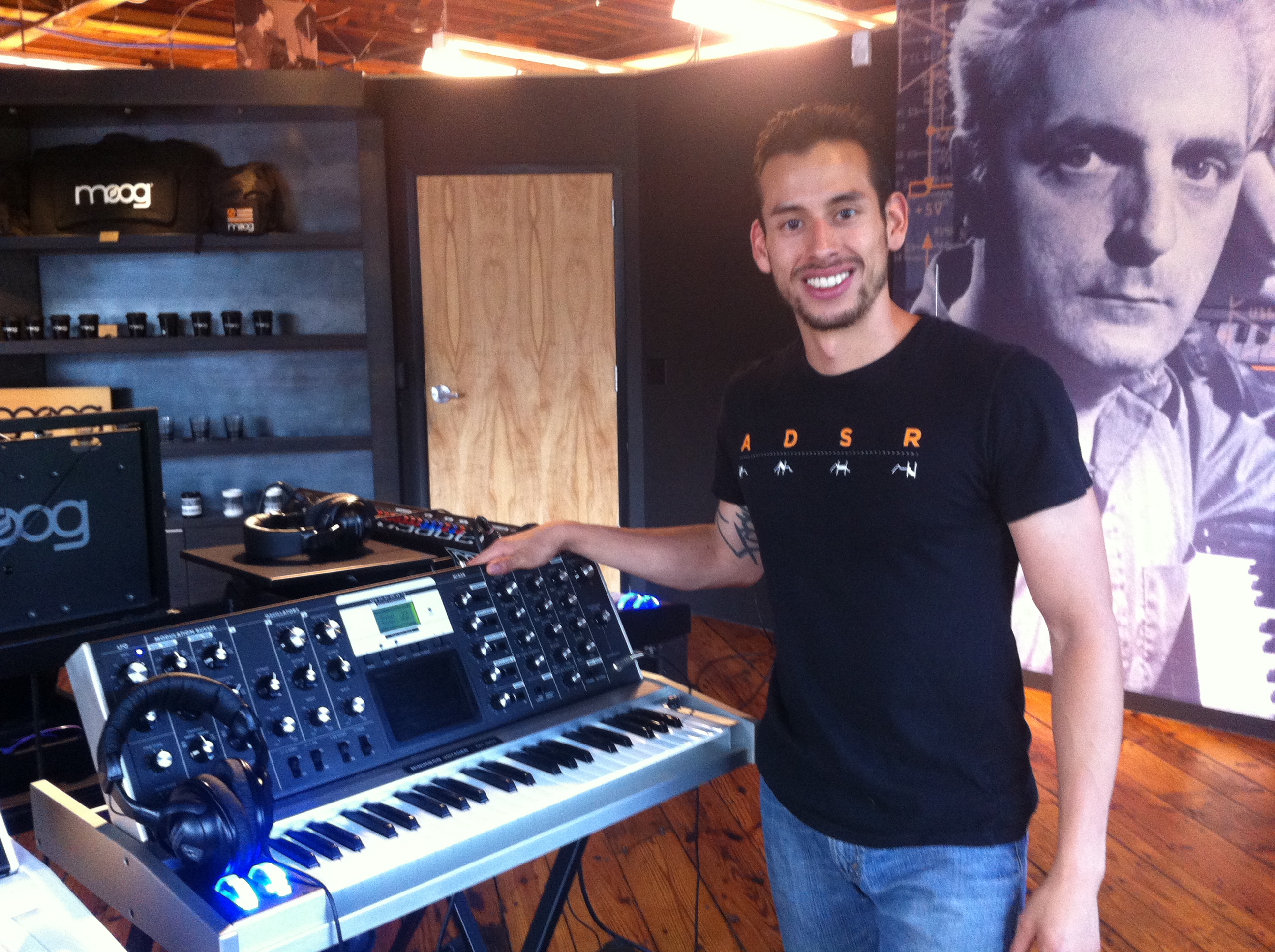
Rob from the Moog shop with Voyager
I opted to pose with the theremin (think of that sound in the Beach Boys’ Good Vibrations). When Robert Moog was a student, he sold theremins in kit form. I guess I was acknowledging his origins (and taking the opportunity to throw a raised eyebrow). I bought myself some geeky souvenirs including a travel mug and a series of ADSR coasters (sorry no money for a synth). Rob also hooked me up with a sweet hexagonal moog calendar when I asked him the price. Thanks dude!
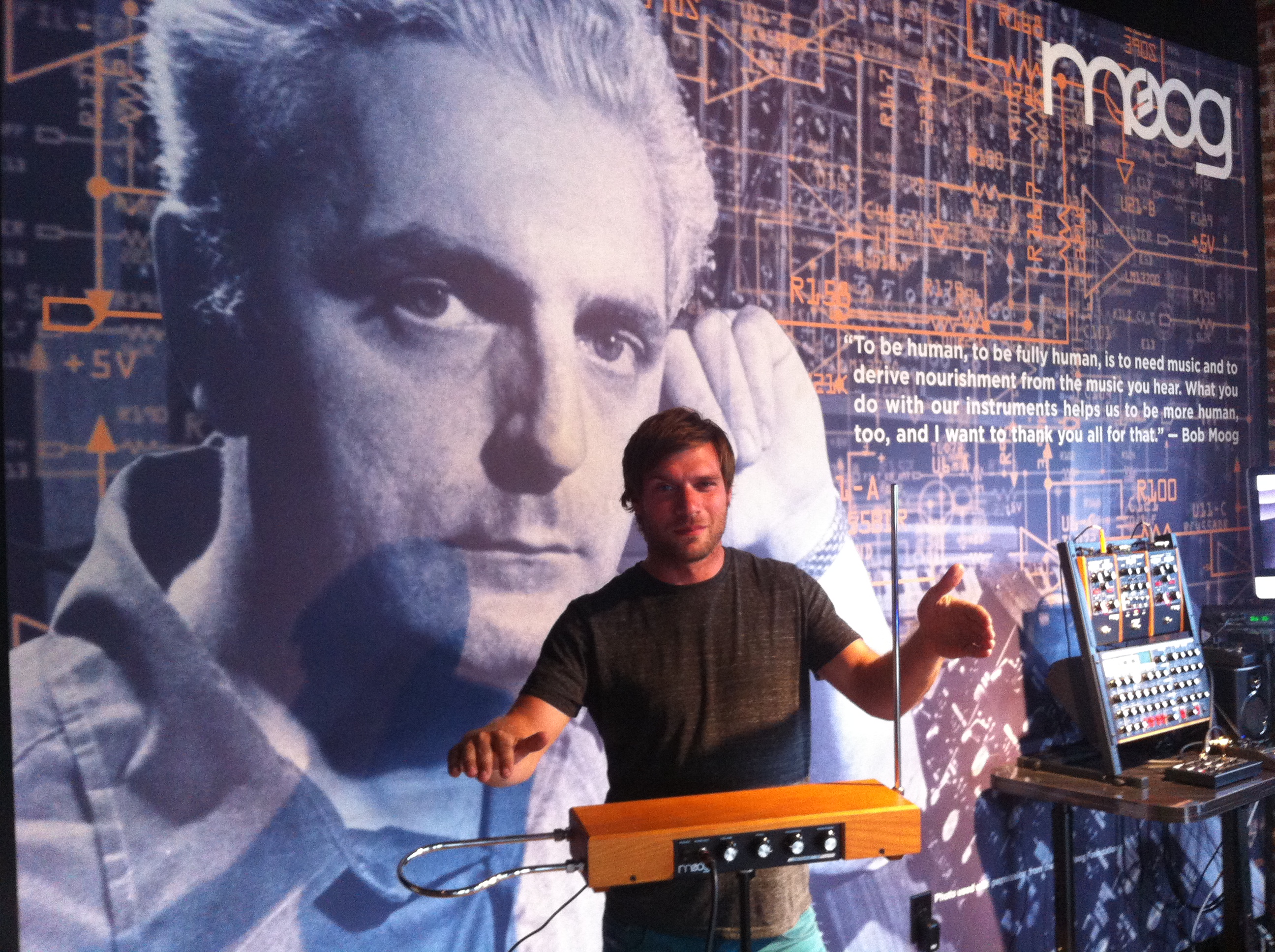
Posing with a Moog theremin
Still sore from the 10 hour hike the day before, I asked Rob for a suggestion on yoga spot in the area. He mentioned the Asheville Community Yoga Center. I wish every long drive on this trip ended with a yoga session.

Asheville Community Yoga
Once class was over I had to decide which of all the great dinner recommendations I would seek out. I was originally planning on going to Rosetta’s, the cornerstone of vegetarian in the town. I heard they had a homemade-kombucha bar, which sounded pretty fantastic. It was already after 8pm, so I decided to consolidate my trip by going to the Brewery that the park ranger had recommended (he knew one of the brewmasters).
I snagged a seat at the bar, and after a glance of the menus, knew I’d made the right decision. With some guidance from Sam the bartender, I ordered the double IPA and a fried-chicken with kimchi sando. Sam went by ‘Slam’ at the bar. There was a Sam Dunkin hired at the same time, so naturally they make the two parts of ‘Slam Dunkin’.

Sam at Wicked Weed
The second Ron I met in Asheville was a fellow solo roadtripper. He had just come from Rosetta’s and was on the IPA wagon with me. Between Slam and Ron, I felt like I was at dinner with friends. Sam gave us tastings of her favorite beers, including their sours. Sour beer is an odd thing to me, but it’s hard to turn down free beer. Thanks again for the free round!
After dinner, I still had to find a place to sleep. The plan was to camp and couch surf, so I couldn’t chicken out and get a hotel room just because it’d been raining and it was close to midnight. The guys at the Moog shop insisted I could camp off any trail on the Blue Ridge Parkway, so I headed in that direction. It was a curvy, 40 mph local highway, much like Skyline. I noticed cars parked on big grassy shoulders, presumably campers in the woods behind.
I pulled onto the first large shoulder I could find, my small coupe awkwardly bobbling over the uneven ground. I slung on my headlamp and entered the forest looking for a suitable campsite and to check for bear. I big ol’ possum clunked around, totally un-phased by my bright headlamp. The slope of the forest, way too sleep for tent camping meant I’d either sling up the hammock in the rain or camp on the actual shoulder. I was headed for Nashville at dawn, so I didn’t have time to be picky about matters, so I popped a tent on the forest-side of my car and napped for about four hours. Two to three cars and hour would drive by and I would laugh to myself as I imagined what their reaction would be to such a site.
Down South
On the Road to Asheville

Down South
Drinking Waterfall Water
Just to be clear, I came prepared with iodine capsules for treating freshwater. It takes half an hour to purify, but well worth the wait.
IMG 5598 from mike k on Vimeo.
Down South
Goal #10 :: See some Wildlife
bearmorning from mike k on Vimeo.
Sunday morning I awoke to loud rustling around 7am. It had the familiar pace of an animal negotiating obstacles. Luckily, I slept with the rain fly off my tent, so I could watch the shooting stars after my hike. My eyes still at a soft focus, I searched the brush for where the sounds were originating.
I hear the crunch and chew of an animal eating. But where is it?
Then came the thud of an apple striking the ground. I looked up to see the black bear up near the top of the tree, running a train on the apples.
My neighbors left their beer-can trash out the previous night. There’s a strict no trash policy to avoid bear encounters. Hitting the road for Asheville, I didn’t have time to see how the scenario panned out, but he was eating apples by the dozen, so I figured the sleeping campers were better left alone.

On the Skyline Drive the previous day, I did get to catch a rather cute bear-crossing. A mama bear + four cubs. If you watch the Skyline timelapse, you can catch them for a moment when I’m stopped behind an SUV. I did catch the last bear on my DSLR, but I didn’t have time to touch the settings (left on manual), so it is what it is.
Down South, Timelapse
Skyline Parkway Timelapse
Skyline720 from mike k on Vimeo.
I’ve been using two action cameras during my trip. A GoPro Hero 3, lent to me by my buddy Carlos, and a knock-off GoPro simply called the SJ4000. Since the SJ has an lcd on the back, it’s nice for handheld use. I recorded the cliff jumping video with the SJ, but realized after recording that it left the dumb time stamp on the video! Bad default settings (which always seem to go back to default).
The SJ doesn’t offer as many timelapse settings, so I have been dashboard mounting the GoPro for my drives. Long drives I’ve been shooting on 5sec timer to ration card memory. Shorter drives (under 3 hours), I’ve been shooting at 1/2 second intervals, which make for smoother results. This Skyline Parkway drive, was about 2 hours total (with pit stops) and I just love it (because it was such a great drive).
See if you can find the bear crossing momement!
Down South
Hike a Mountain – Part 2
Since the Skyline Parkway runs along the top of the mountain, it makes for reverse hiking, meaning climb down the mountain and back up. My trail was no different, and I began my descent on Cedar Run, a 3 mile trail that follows a creek. The White Oak Canyon trail has its own shorter trail, which seemed to be the popular choice (and 2-3 miles shorter). I would’ve ordinarily done that hike, but the rangers insisted that this loop was the proper way to see the trail.
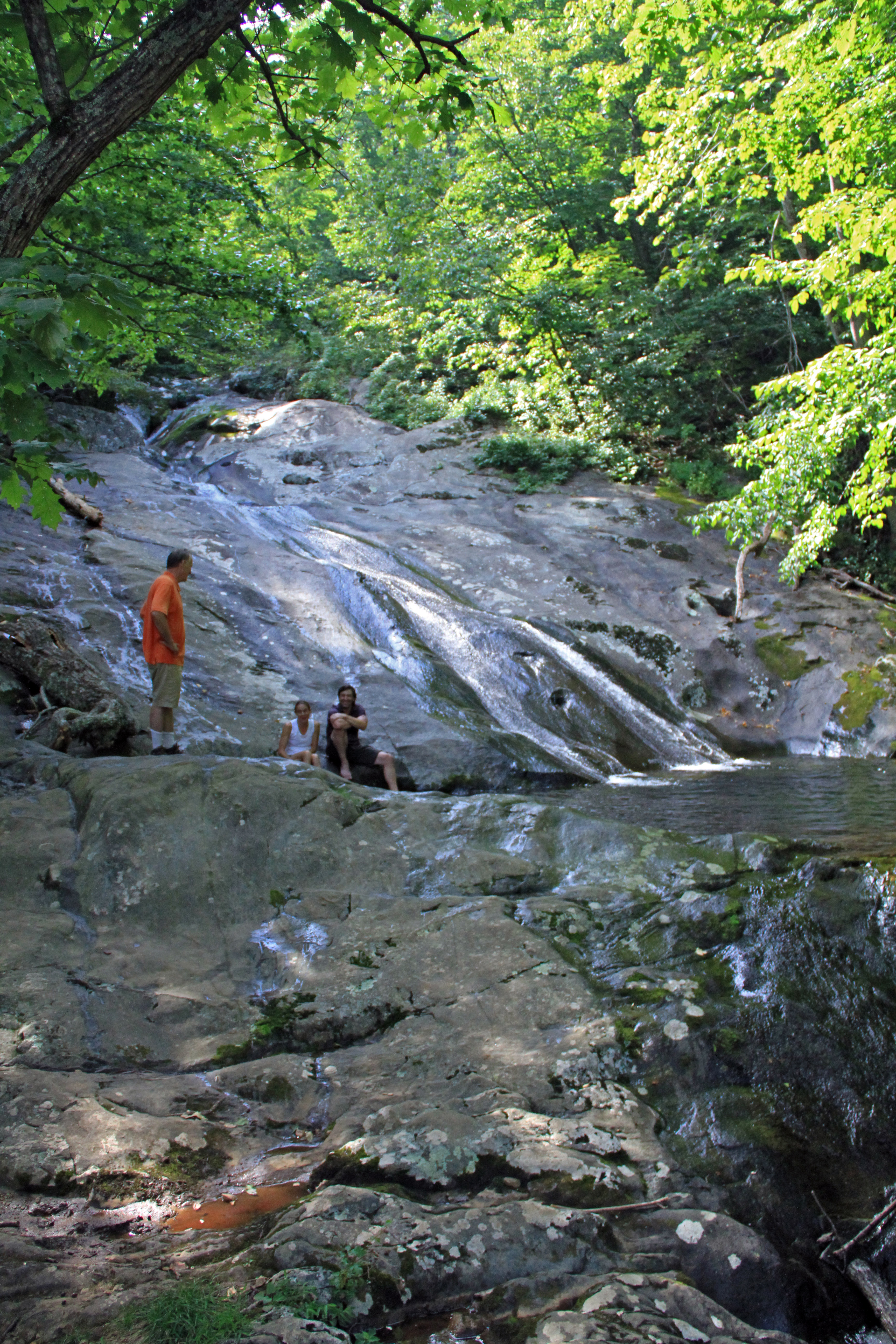
Cedar Falls (the first of the two)
The first waterfall I came across in Cedar Falls had a nice slope that people could slide down into its pool. I knew I only had time to enjoy one swim, and I was set on finding a cliff jumping area that some passing hikers gave me the scoop on. The first waterfall is where I spoke with Howard.

Howard, a local hiker, who I met at the first falls
Howard, a local hiker, had just finished his waterfall session and spoke of his friends’ success; one a producer for Wes Anderson’s Grand Budapest Hotel, one an art collector with a museum in Potomac, MD. Unfamiliar with the sculptor, he described the experience of walking into the walls of what sound like a Richard Serra piece – high steel curves that lead you into his intended space (which he described as awkward).

Area above the cliff jumping ledge (lower on Cedar Falls)
Not much further down the trail, my ears were tickled by the sounds of deep splashes – the sound after jumping from a high spot. Once I made it to the clearing, I found two groups of teenagers diving and flipping from the fifteen foot rock edge into the deep, freshwater pool below.

Whit and Kaylyn on Cedar Run trail, Shenandoah.
After all the fun of cliff jumping, I had to get back on the trail if I was going to make it most of the way before dark. Shortly after, I met Whit and his granddaughter, Kaylyn, leaving the swimming hole in the same direction.
I needed to get my bearings on my location, so I asked Whit if he knew how far ahead the connecting path would be. I had assumed I was much further on my hike than I had been! His first reaction was to tell me to turn around and go back the way I came (I think it was 5:30pm at this point), since there was no way I’d make it out the other side before dark.
I mentioned that I packed my headlamp, and he politely modified his advice in case I had taken offense. “You look pretty gamey. If you packed your headlamp you should go for it.”
I’ve never heard someone use “gamey” to describe a person, but in bear country, it’s a compliment. Whit mentioned the notoriety of hike up the falls “breaking backpackers,” so I was mentally preparing for the hardship to come.
Photos and details of the rest of the experience to come.
Down South
Goal #2 :: Find a Waterfall or Cliff Jump
I’m happy to say I did both! Even though I made this epic list of 21 goals, I never divulged them to Matt, my buddy who recommended the trail. I guess waterfall hikes are really what everyone wants to do when it comes down to it.
I recorded a few jumps; two of my own jumps and one of Dan “Real Deal” McGrill doing a backflip (two cams for this!).
As far as footage is concerned, my second jump gives the best visual experience so I’ll post that first. Enjoy!
My2ndcliffjump720 from mike k on Vimeo.